Complete Hurricane Preparedness Guide for Tampa Bay Homeowners
Every year from June through November, Tampa Bay residents face the reality of hurricane season. While we can’t control the weather, we can control how prepared we are. This comprehensive guide covers everything Tampa homeowners need to know about protecting their property and ensuring adequate insurance coverage.
Understanding Tampa’s Hurricane Risk
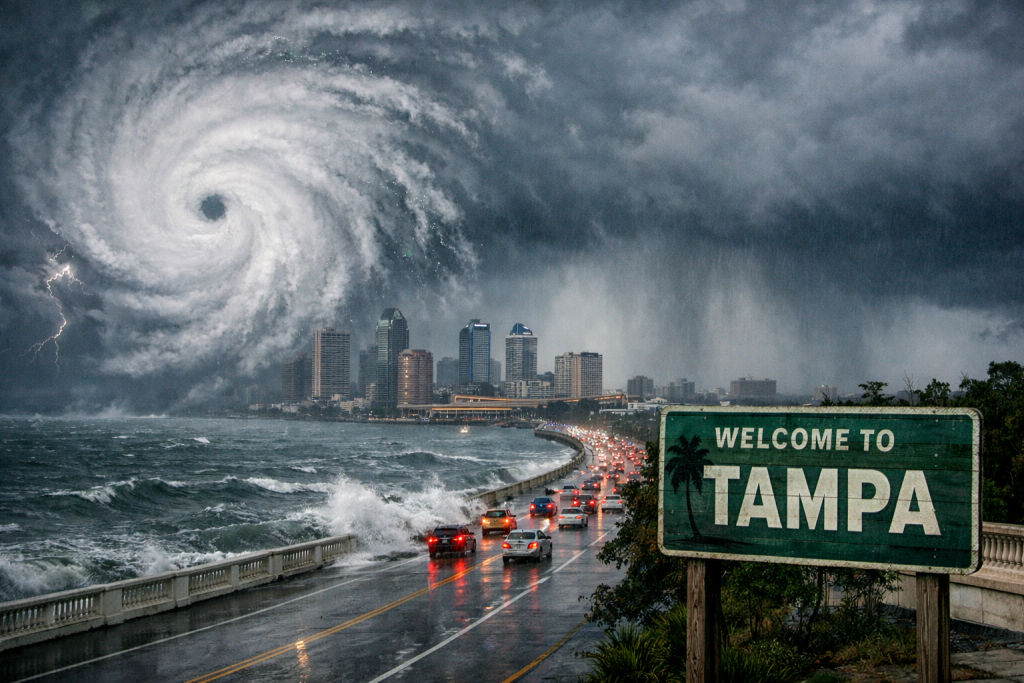
Tampa Bay’s unique geography creates specific vulnerabilities during hurricane season. The bay acts as a funnel that can intensify storm surge, and our low-lying coastal areas face significant flood risks even from tropical storms that don’t reach hurricane strength.
Recent history reminds us of this threat:
- Hurricane Ian (2022) caused widespread damage across Florida
- Hurricane Irma (2017) resulted in billions in insurance claims
- Hurricane Charley (2004) devastated portions of the Tampa Bay area
The reality is that Tampa has been fortunate to avoid a direct hit from a major hurricane in over 100 years—but that doesn’t mean we won’t be next. Preparation is essential.
Your 90-Day Hurricane Preparation Timeline
90 Days Before Hurricane Season (March-April)
Review Your Insurance Coverage

Now is the time to review your homeowners insurance policy with your agent. Specifically, check:
- Wind/Hurricane Deductibles: Many Florida policies have percentage-based hurricane deductibles (typically 2%-10% of your dwelling coverage). On a $300,000 home with a 2% deductible, you’d pay $6,000 out-of-pocket before insurance kicks in.
- Dwelling Coverage Limits: Ensure your coverage reflects current replacement costs, not just market value. Construction costs have increased significantly, and you want enough coverage to fully rebuild.
- Additional Living Expenses (ALE): If your home becomes uninhabitable, ALE covers hotel stays, meals, and other living costs. Verify you have adequate coverage—Tampa hotel rooms during evacuations aren’t cheap.
- Personal Property Coverage: Document your belongings now (see inventory tips below). Standard policies cover 50-70% of dwelling coverage, but you may need more.
Get Flood Insurance
Here’s what many Tampa homeowners don’t realize: Standard homeowners insurance does NOT cover flood damage.You need a separate flood insurance policy through the National Flood Insurance Program (NFIP) or a private insurer.
Important flood insurance facts:
- There’s typically a 30-day waiting period after purchase
- You don’t need to be in a flood zone to get flooded (20-25% of flood claims come from outside high-risk areas)
- Flood insurance covers up to $250,000 for your dwelling and $100,000 for contents
- Average cost in Florida: $500-700 annually (varies by location and elevation)
Even if you’re not in a designated flood zone, consider flood insurance. Tampa’s heavy rains and storm surge can cause flooding anywhere.
Create a Home Inventory
Walk through every room of your home and document your belongings:
- Take photos or videos of each room from multiple angles
- Open closets and photograph contents
- Document serial numbers for electronics, appliances
- Keep receipts for high-value items (jewelry, art, collectibles)
- Store digital copies in the cloud (Google Drive, Dropbox) and with your insurance agent
A complete home inventory makes the claims process much faster if you need to file after a storm.
60 Days Before Hurricane Season (May)
Inspect and Prepare Your Property
Walk around your home and property looking for vulnerabilities:
Roof Inspection
- Check for loose or missing shingles
- Inspect flashing around chimneys and vents
- Clear gutters and downspouts
- Consider a professional roof inspection (many insurance companies require this)
- Take photos of your roof’s condition pre-storm (helpful for insurance claims)
Windows and Doors
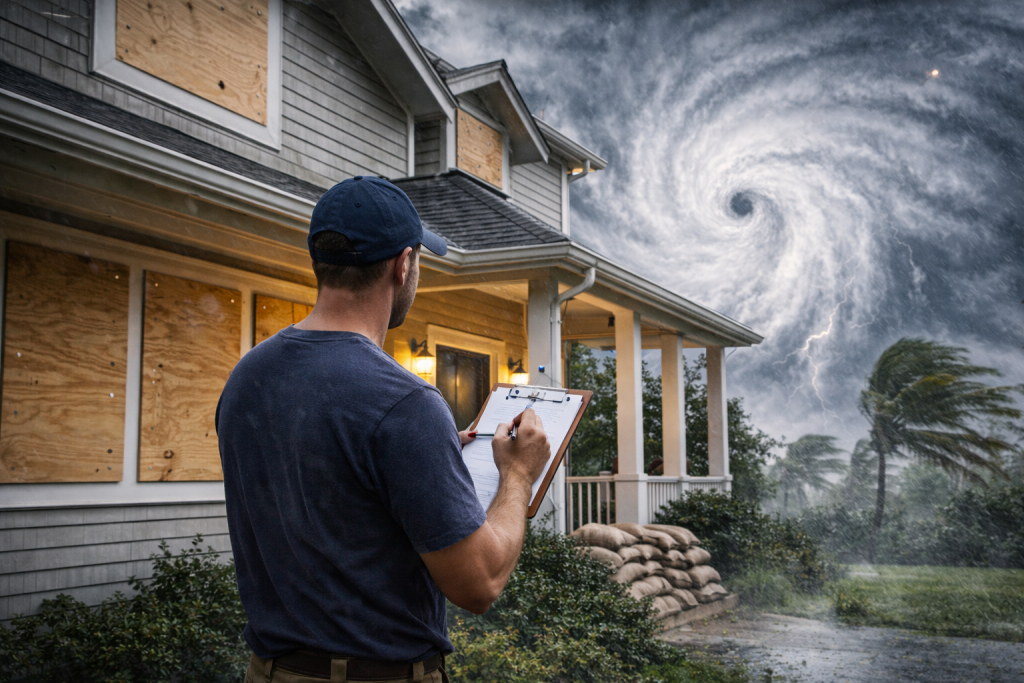
- Install hurricane shutters or impact-resistant windows
- If shutters aren’t in budget, measure windows and buy plywood panels
- Check door seals and weather stripping
- Consider reinforcing garage doors (they’re often the weakest point)
Trees and Landscaping
- Trim dead branches that could become projectiles
- Remove dead or diseased trees near your home
- Secure or store outdoor furniture, grills, decorations
- Know where you’ll store patio furniture when a storm approaches
Drainage
- Clear storm drains near your property
- Ensure downspouts direct water away from your foundation
- Grade soil away from your home’s foundation
30 Days Before Hurricane Season (May-June)
Stock Your Hurricane Supplies
Create a hurricane supply kit with enough provisions for 3-7 days:
Essential Supplies:
- Water (1 gallon per person per day)
- Non-perishable food (canned goods, protein bars, dried fruit)
- Manual can opener
- Battery-powered or hand-crank radio
- Flashlights and extra batteries
- First aid kit with prescription medications
- Cash (ATMs may not work after storms)
- Important documents in waterproof container
- Phone chargers and backup batteries
Home Protection Supplies:
- Plywood for windows (pre-cut and labeled)
- Tarps and plastic sheeting
- Duct tape
- Work gloves
- Tools (hammer, screwdrivers, saw)
- Generator (if budget allows) with proper outdoor use
- Extension cords
- Fuel storage containers
Create Your Evacuation Plan
Know your evacuation zone:
- Visit KnowYourZone.org for Hillsborough County
- Zones range from A (highest risk) to E (lowest risk)
- Carrollwood, Wesley Chapel, New Tampa have different risk levels
- Plan multiple evacuation routes in case roads are closed
Decide where you’ll go:
- Identify hotels outside evacuation zones
- Consider staying with family/friends inland
- Know locations of emergency shelters (though these should be last resort)
- Don’t wait for mandatory evacuations—roads become impassable quickly
When a Storm is Approaching (5-Day Checklist)
5 Days Before Projected Impact
- Monitor weather forecasts constantly (NOAA, local news)
- Fill prescriptions
- Fuel up vehicles
- Check hurricane supplies
- Notify out-of-town family of your plan
- Review insurance coverage one more time
3 Days Before Projected Impact
- Stock up on groceries, water, batteries
- Withdraw cash from ATM
- Charge all devices
- Fill bathtubs with water (for flushing toilets)
- Secure outdoor items
- Take photos of your property’s condition
1 Day Before Projected Impact
- Install shutters or board windows
- Move furniture away from windows
- Turn refrigerator/freezer to coldest settings
- Fill car with gas
- Confirm evacuation plans if in evacuation zone
- Take final photos/videos of property
- Notify insurance agent you’re prepared
After the Storm: Filing Insurance Claims
If your home sustains damage:
- Safety First: Don’t return until authorities say it’s safe
- Document Everything: Take photos/videos of ALL damage before cleaning up
- Prevent Further Damage: Tarp roofs, board windows (save receipts—this is covered)
- Contact Your Insurance Agent: Report claim immediately
- Keep Detailed Records: Save all receipts for repairs, temporary housing, meals
- Don’t Make Permanent Repairs: Wait for insurance adjuster’s inspection
- Be Patient: After major storms, claims take time to process
Common Insurance Questions Tampa Homeowners Ask
Q: My mortgage is paid off. Do I still need homeowners insurance?
A: Legally, no. Practically, absolutely yes. One hurricane can wipe out a lifetime of home equity. Insurance protects your investment.
Q: Will my rates go up if I file a hurricane claim?
A: Weather-related claims typically don’t impact your rates the same way at-fault incidents do. However, multiple claims can affect future insurability. Discuss this with your agent.
Q: Should I increase my hurricane deductible to lower premiums?
A: This depends on your financial situation. Higher deductibles mean lower premiums but more out-of-pocket costs during a claim. Can you afford a $10,000 deductible if a hurricane hits?
Q: Does insurance cover my pool screen enclosure?
A: Typically yes, but it’s often a separate structure with its own deductible. Check your policy declarations page.
Q: What if my claim is denied?
A: You have the right to appeal. Document everything, get independent estimates, and consider hiring a public adjuster. Your insurance agent can advocate on your behalf.
Tampa-Specific Hurricane Resources
Official Resources:
Weather Monitoring:
- National Hurricane Center (NOAA)
- Local news: ABC Action News, Fox 13, News Channel 8
- NOAA Weather Radio
Shelter Information:
- Hillsborough County Shelter Hotline: 311 or (813) 272-6464
- Special needs shelters require pre-registration
Don’t Wait Until It’s Too Late
Hurricane preparation isn’t about panic—it’s about being proactive. The time to prepare is now, before a storm is in the Gulf heading our way.
Take these steps today:
- Review your insurance coverage
- Get a flood insurance quote
- Create your home inventory
- Build your hurricane supply kit
- Develop your family evacuation plan
Want to review your hurricane coverage or get a flood insurance quote? Contact GRL Insurance today. We’ll walk you through your policy, identify gaps in coverage, and ensure you’re protected before hurricane season arrives.
Protect Your Tampa Home Today
Don’t wait for a storm to be in the forecast. Get a comprehensive insurance review and flood insurance quote from GRL Insurance, your Tampa Bay insurance experts since 1983.
Call us at (813) 393-4709 or get a free quote online.
About the Author: Gary Lefebvre has been helping Tampa Bay families protect their homes and assets since 1983. As a licensed Allstate agent, he’s helped countless homeowners navigate hurricane claims and ensure they have adequate coverage for Florida’s unique risks.